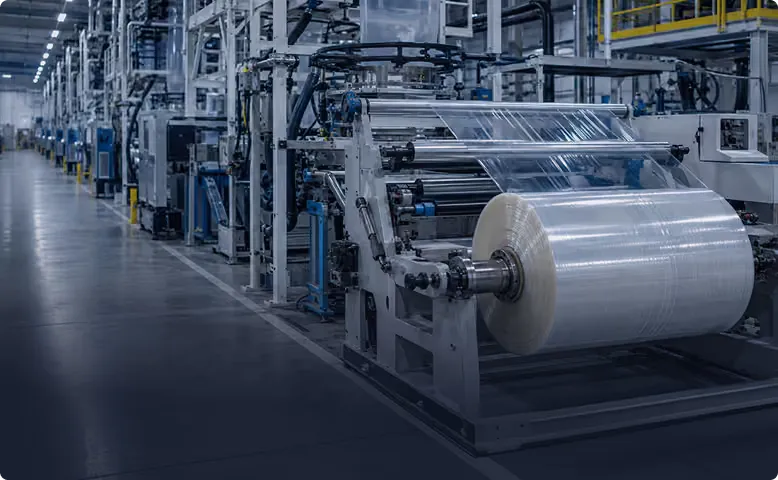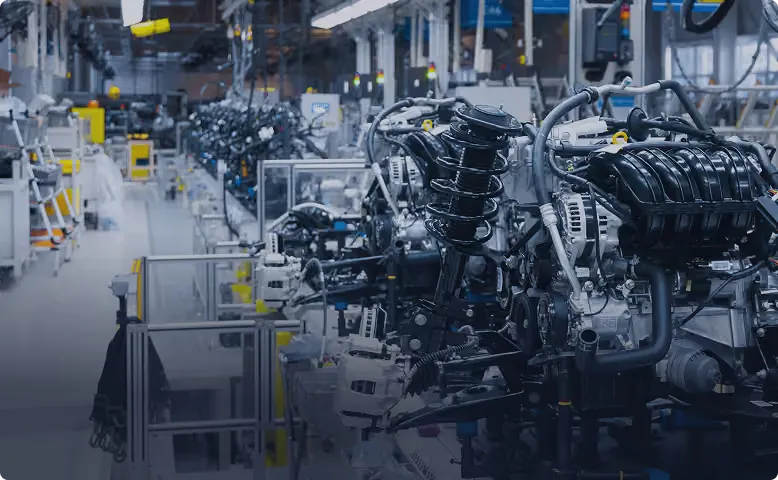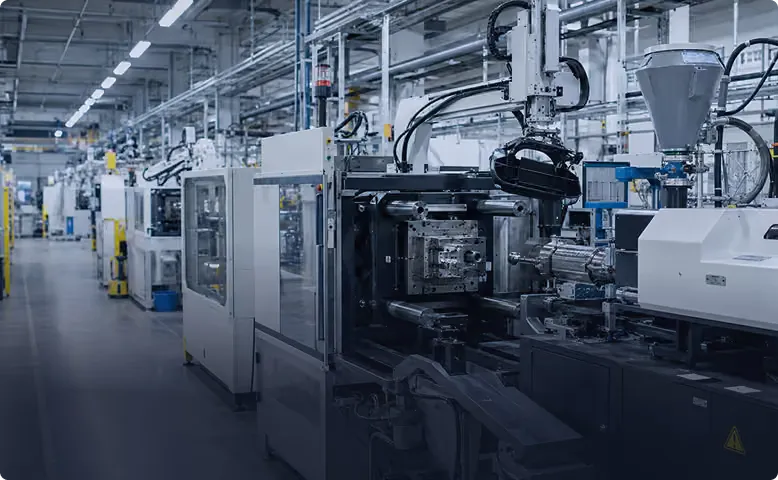











Search for factory automation software and you’ll find PLC programming suites, SCADA packages, MES platforms and scheduling tools in the same list. Tristar is none of those. It’s the software that looks at your product through a camera and decides, part by part or foot by foot, whether it’s good.
That’s a narrow job, and it’s the one the rest of the stack can’t do. A PLC knows the reject gate fired. It doesn’t know whether the part that went through had a scratch.
What the automation software does all day
Take away the cameras and the server and what’s left is the product: software that turns images into decisions, and decisions into records.
- Models. A foundation model that already understands materials, tuned on your samples. It tolerates normal variation in color, texture and gloss and flags the defects you’ve defined, plus anomalies nobody has named yet.
- Alerts. When a defect or a spike appears, the operator station shows it and sounds it. Mass alerting reaches more people when the problem is bigger than one station.
- Dashboard. Leadership sees defect rates and trends across lines without asking for a spreadsheet.
- Roll reports and roll maps. For web products, each roll gets a map of where every defect sits, with its size and time.
- Traceability. Detections are stored with images and tied to the lot.
- Integrations. Results go out to the PLC, reject equipment, robots and MES or ERP.


Examples of what the film models classify. Each detection is stored with its image, position and time.
If you’re comparing AI visual inspection software for manufacturing against a classic vision tool, the difference is in the first bullet. AI vs. rule-based machine vision goes through where each one fits.
Where it sits beside PLC, SCADA and MES
Most plants already own several layers of factory automation software. Tristar adds one and feeds the others.
| System | Its job | What Tristar gives it |
|---|---|---|
| PLC | Controls machines and sequences the line | A pass or fail signal to drive a reject gate, kick-off system, flagger or robot |
| SCADA and HMI | Shows operators process values and alarms | Nothing is replaced. Tristar’s alerts run at the line alongside it |
| MES and ERP | Tracks orders, lots, genealogy and inventory | Defect records tied to the lot |
| Tristar | Inspects product with cameras and AI models | Its own outputs: alerts, dashboard, roll reports |
So you don’t rip anything out, and nobody has to learn a new control platform. Your controls engineer keeps ownership of the PLC logic. We agree on the signal, and the existing program decides what to do with it. The loop from verdict to action is covered on the manufacturing process automation page.
What it runs on
The hardware is deliberately ordinary. Cameras are off-the-shelf industrial models, with line-scan cameras for moving webs. Compute is an edge GPU server installed in your plant, and inspection doesn’t need a cloud connection. Edge AI for quality inspection explains why the processing stays on site.
Because the value is in the software, we can evaluate running on cameras you’ve already installed. Sometimes they’re fine. Sometimes the smallest defect you care about needs more resolution than they have, and we’ll say that before you buy anything.
Tristar also delivers complete stations for plants that want the hardware, lighting and software from one supplier. See AI visual inspection for what a station includes.
AI for factory automation, minus the science project
A fair worry about AI for factory automation is that it turns into a data science program inside the plant. It shouldn’t. The work is split so that your team spends its time on judgment and ours on modeling.
You send samples
Good and bad examples of the product, and your definition of what counts as a defect.
Tristar labels and trains
We do the labeling and the model training. Your team validates the edge cases.
The software goes live
It's connected to the cameras, the PLC and your reporting. A calibration report documents the starting point.
A weekly review keeps it current
The system flags anomalies, and a short session with your engineers sets tolerances and adds defect types.
New SKUs don’t restart this process. What the model learned on one product carries over to the next, and plant engineers can add inspection points with a handful of images.
Subscription or owned license
There are two ways to buy. An annual subscription keeps the software as an operating expense. A CapEx purchase means you own the software license outright. Which one fits depends on how your plant funds equipment, and we’ll price both.
For a sense of return, a flexible packaging producer running Tristar on four high-speed film lines cut customer claims by 50% and scrap by 25%, with a 4-month payback. The case study is public.
That’s their result, on their film. We’ll tell you what to expect from yours after we run your parts.