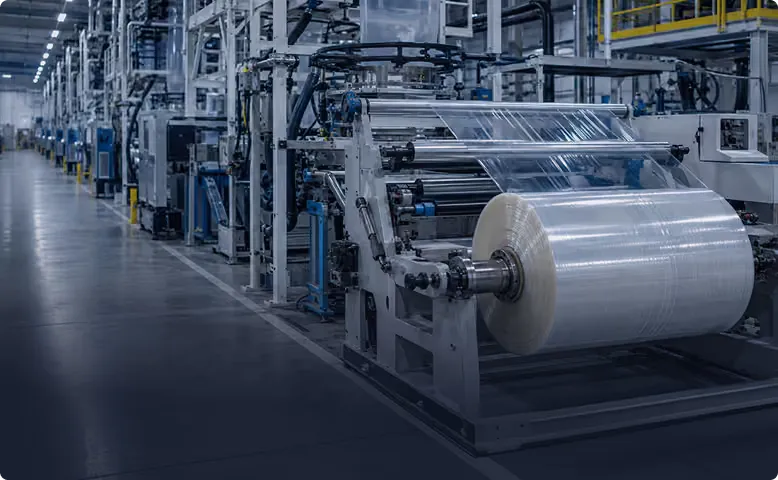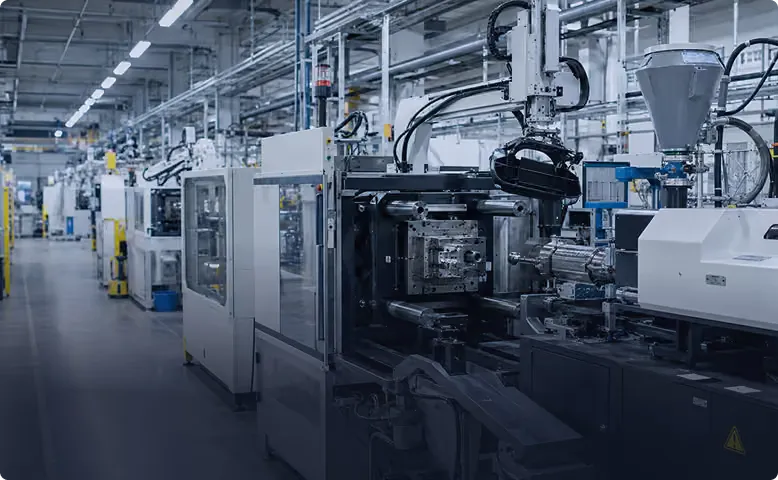











Plastic film inspection is where Tristar started and where it has the most hours in production. Film is fast, wide, often clear, and the defects that cause claims are small enough to slip past anyone watching the web from the winder. A gel that nobody saw becomes a hole in a bag at the customer’s filling line, and the claim comes back weeks later with no way to tell which roll it was.
Tristar puts cameras on blown film and cast film lines, on printing presses and on bag machines, and keeps a record of every defect by roll.
Defects by stage, and what usually causes them
Most film defects have a known origin. Naming the defect correctly is half the fix, which is why classification matters more than a count of spots.
| Defect | Where it shows | Usual cause the operator checks |
|---|---|---|
| Gels, amber gels, fisheyes | Extrusion | Degraded or crosslinked resin, screen pack condition |
| Carbon specks | Extrusion | Buildup in the screw, barrel or die breaking loose |
| Eyelashes | Extrusion | Material collecting at the die lip |
| Burn-through, bubbles, pinholes | Extrusion, treatment | Overheating, moisture, treater issues |
| Contamination, inclusions | Extrusion | Foreign material in the feed or regrind |
| Poor print | Printing | Ink, plate or registration drift |
| Bad seal bar | Bag converting | Residue, temperature or pressure at the seal jaw |
| Gusset irregularities | Bag converting | Fold guide out of position |
| Wicket mismounting, stack misalignment | Wicketing | Transfer and stacking setup |

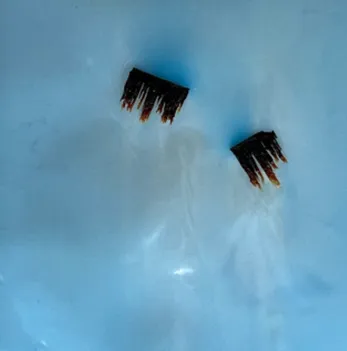
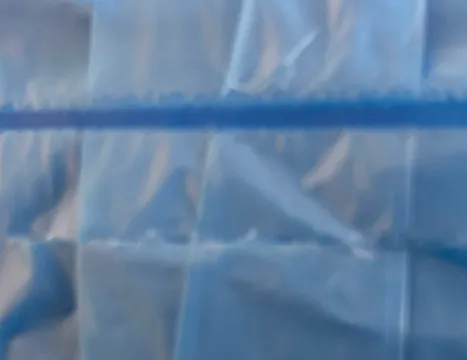
Film defects from production lines inspected by Tristar.
Each of these is covered in more depth, with causes and examples, in AI defect detection for plastic film.
Why film defect detection AI beats a brightness threshold
Clear and lightly pigmented film is a hard background. Whatever sits behind the web shows through it, haze changes with gauge, and printed film adds a pattern that changes every job. A threshold system flags anything darker or brighter than expected, so on this material it either misses real defects or buries operators in false alarms.
A learned model knows what your film looks like when it’s good. Tristar’s models start from a foundation model that already understands materials and looks past gloss, opacity and background. It separates a gel from a carbon speck and from a harmless gauge band, and when you run a new SKU the knowledge carries over instead of starting from zero. AI vs. rule-based machine vision explains the difference in more detail.
A station on each part of the film plant
On extrusion, line-scan cameras span the full width after the bubble is collapsed or after the chill roll. They image every foot of web and write each defect to a roll map. The inline web inspection page covers that station, including flaggers and roll reports.
At the press, the camera watches for poor print while the job is running, so a drifting station is corrected before the whole job is printed. On the bag machine, area cameras check seals and gussets bag by bag and signal the reject. At the wicket, they check that bags are mounted and stacked straight before the case is packed.
Tristar runs dimensional measurements alongside defect inspection on film lines. What can be measured on your product depends on the camera, so we scope it during the lab phase.
Results on four high-speed film lines
A flexible packaging producer runs Tristar on four high-speed plastic film lines, detecting contamination, seal bar defects and gusset irregularities in real time. The numbers from that deployment:
- Customer claims down 50%.
- Scrap down 25%.
- 2 FTE moved off manual inspection.
- $814,000 in annual savings and a 4-month payback.
The producer is expanding Tristar to four more plants in 2026 and 2027. The full plastic film case study is public.
What to send us first
Pick the defects that drive your claims and scrap, and send samples of them along with good film from the same product. About twenty of each is enough to start. We run them in the lab, find the lighting and camera setup that cuts noise on your film, and report what the model caught and what it missed.
If the film can’t leave the plant yet, we’ll schedule a short site visit so the lab is ready the day samples arrive. Either way, we’ll tell you what the system can do after we’ve run your film.