










A label inspection system answers a question every packaging line asks thousands of times a shift: is the right label on this unit, in the right place, printed well enough to read? People are bad at asking it consistently. Cameras aren’t.
Tristar checks every unit at line speed, signals the reject when a label fails, and stores an image of each failure with its lot. That last part is what turns label inspection into a traceability inspection system for packaging, not only a reject gate.
What goes wrong with labels
Most label failures are mechanical and boring, which is exactly why they slip through. A labeler runs out of stock or misfeeds, and units go by bare. A label goes on crooked or shifted after a changeover. A print head fades, smears or skips, and a run of labels goes out with voids in them. A wrong roll gets loaded on a changeover.
On flexible packaging, the print is the label, and print defects show up on the bag itself.
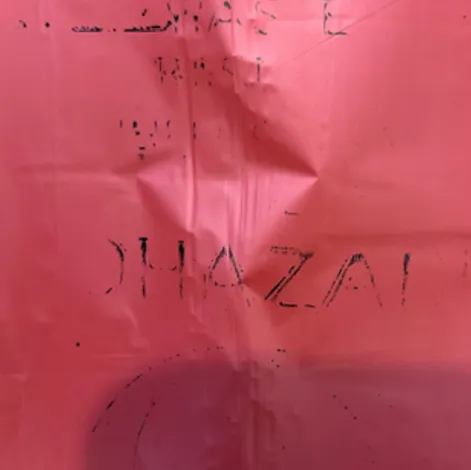
None of these is hard to spot on one unit. The trouble is that someone has to look at all of them, at line speed, through a whole shift, and the defect rate is low enough that attention wanders.
Label verification on every unit
The station sits after the labeler or printer and before the case packer. It looks at each unit and checks the things you’ve defined: is a label there, where is it, which way up is it, and is the print acceptable.
| Check | What fails it | What the line does |
|---|---|---|
| Presence | No label, partial label | Reject signal to the PLC |
| Placement | Shifted, skewed or upside-down label | Reject and alert the operator |
| Print quality | Smears, voids, faded print | Alert at the printer, reject if out of tolerance |
| Repeat failures | The same defect on consecutive units | Alert so someone fixes the cause |
Which of these your station runs depends on what your customers reject and what your current process misses. If you need code reading or verification of specific content, tell us which, and we’ll confirm it on your packaging in the lab.
How a label inspection camera handles gloss and changeovers
Labels are often glossy, and containers can be clear, curved or reflective. Rule-based tools that compare pixels to a template false-reject on glare and need retuning every time the design changes. Tristar’s models start from a foundation model that looks past reflection and background and focuses on the material, and lighting is set up in the lab to cut glare before the model sees an image.
Changeovers are the other problem. A plant with many SKUs can’t spend a project on each new label. Tristar’s models transfer knowledge between SKUs, so a new design starts from what the model already knows. For a high-mix plant, start with the products and failures that cost the most and add the rest once those run. How AI defect detection works explains why the model doesn’t start from zero.
Traceability inspection for packaging
Rejecting a bad unit is half the job. The other half is being able to show, later, what was rejected and why. Every failure Tristar records has an image, a timestamp and the lot it belongs to. When a retailer sends a chargeback or an auditor asks about a lot, the answer is a search, not a meeting.
For audits, Tristar provides a calibration report at install and recurring checks after it, plus a validation set tracked by defect type. The buyer’s checklist explains what to ask any vendor about validation.
Label checks often sit next to other packaging checks. The packaging inspection page covers film, seal and bag inspection on flexible packaging lines.
Start with your labels, not our claims
Tristar’s packaging results come from four high-speed flexible packaging lines, where customer claims fell 50% and scrap fell 25%. Your labels are a different product, and we won’t promise a result on them from a web page.
Send about twenty good units and twenty with the label failures you see most. We’ll run them in the lab, find the camera and lighting setup, and tell you what the station caught and missed after we’ve run your parts.