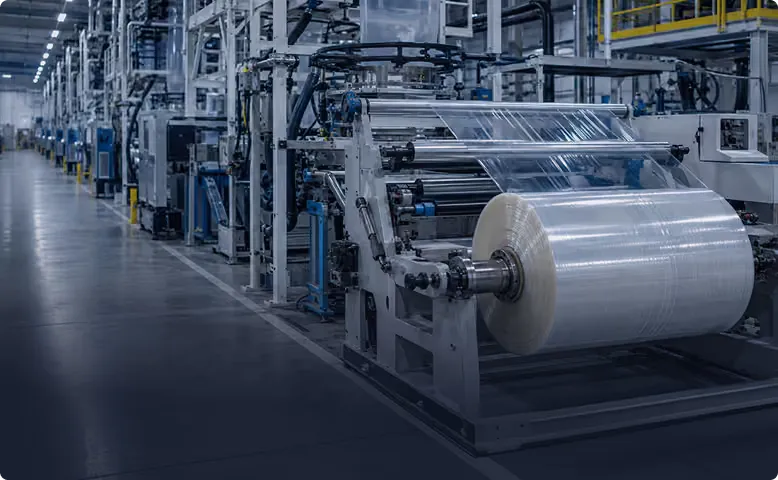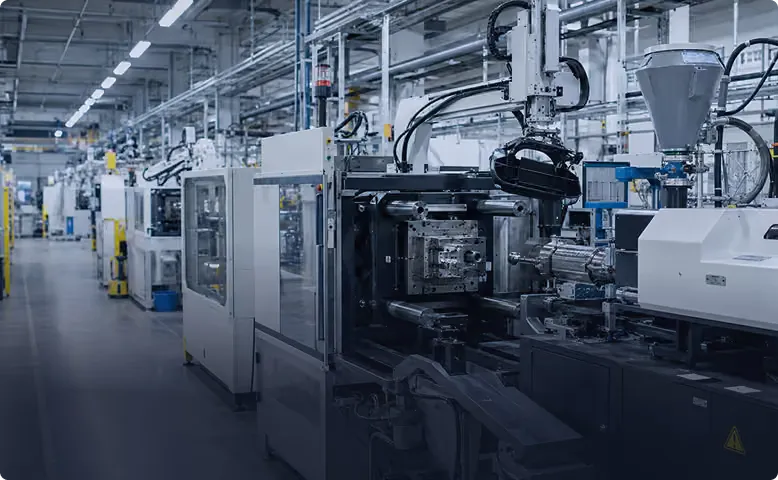











Packaging inspection usually gets attention at the end of the line, after a customer has already found the problem. Tristar moves it upstream, to the extruder, the press and the bag machine, where a camera can see the defect while it’s still being made.
This page is about flexible packaging: film, printed web and bags. Tristar inspects the packaging itself with cameras and learned models. It doesn’t look inside filled packs, and it isn’t a metal detector or a checkweigher.
Where flexible packaging goes wrong
Most claims on film and bags trace back to a short list of causes. Resin degrades or crosslinks in the extruder and comes out as gels and carbon specks, or foreign material gets into the feed. A print station drifts. A seal bar picks up residue and starts leaving bad seals. A gusset folds off-center. Bags go onto the wicket crooked and the stack leans.
None of these is hard to recognize when someone is looking at the right bag. The trouble is speed and volume. An operator can’t watch the full width of a fast web, and a sample pulled from the end of a roll says little about the middle of it. So the defect ships, and the first real inspection happens at your customer’s filling line.
What the AI cameras check, stage by stage
| Stage | What Tristar looks for | What happens next |
|---|---|---|
| Film extrusion and winding | Gels, amber gels, carbon, eyelashes, pinholes, burn-through, inclusions, scratches and abrasions | Position logged to the roll map, operator alerted |
| Printing | Poor print | Alert at the press while the job is running |
| Bag converting | Bad seal bar, gusset irregularities | Signal to the PLC, reject or flag |
| Wicketing and stacking | Mismounted wicketed bags, stack alignment | Alert before the stack is boxed |
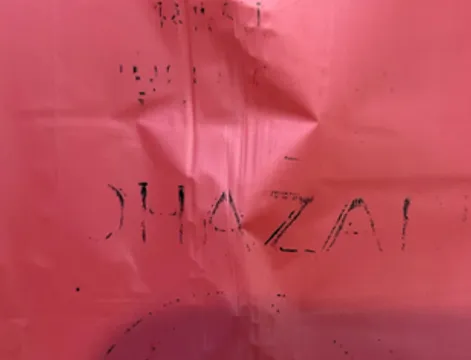


Examples from film and bag inspection: defects in the web and poor print on a finished bag.
Seals deserve more room than a table row. The packaging seal inspection page goes into why they fail and what a camera can and can’t tell you about them. For the film side, AI defect detection for plastic film covers each defect type and its usual cause.
Why machine vision for packaging inspection needs learned models
Threshold-based web inspection finds dark and bright spots on plain clear film well. It struggles to say what each spot is, and it struggles when the background stops being uniform: printed film, seals, gussets and finished bags. It’s glossy, its opacity shifts with gauge, and whatever is behind it shows through. Printed film adds a pattern that changes with every job.
Tristar’s models start from a foundation model that already understands materials, so they look past reflections and background and focus on the film. They learn your product from samples. When a job changes, what the model knows carries over to the new SKU and you aren’t starting again. That’s what makes plastic packaging inspection workable on a line with frequent changeovers.
How a packaging inspection system runs on your line
Mount
Line-scan cameras go over the web, with lighting set up to control glare. Area cameras cover the bag machine and the wicket.
Inspect
An edge GPU server in the plant runs the model on every frame, names each defect and measures it against your tolerance.
Signal
The PLC gets an output for the flagger, edge marker or reject system. Operators get an on-screen or sound alert, and a mass alert can reach the wider team.
Record
Every detection is written to the roll report with its location, size and time, and tied to the lot.
Roll reports, roll maps and the finished pallet
A roll map is a picture of the roll laid flat, with every defect marked where it occurred. It changes the conversation with a customer. Instead of arguing about whether a roll was good, you can see where a contamination event began, how long it lasted and which rolls it touched.
It changes the scrap decision too. With a map, you cut out the affected section and keep the rest. Without one, the safe choice is to scrap the roll. Our scrap reduction page explains how that adds up.
The same kind of model can read a finished load, too.
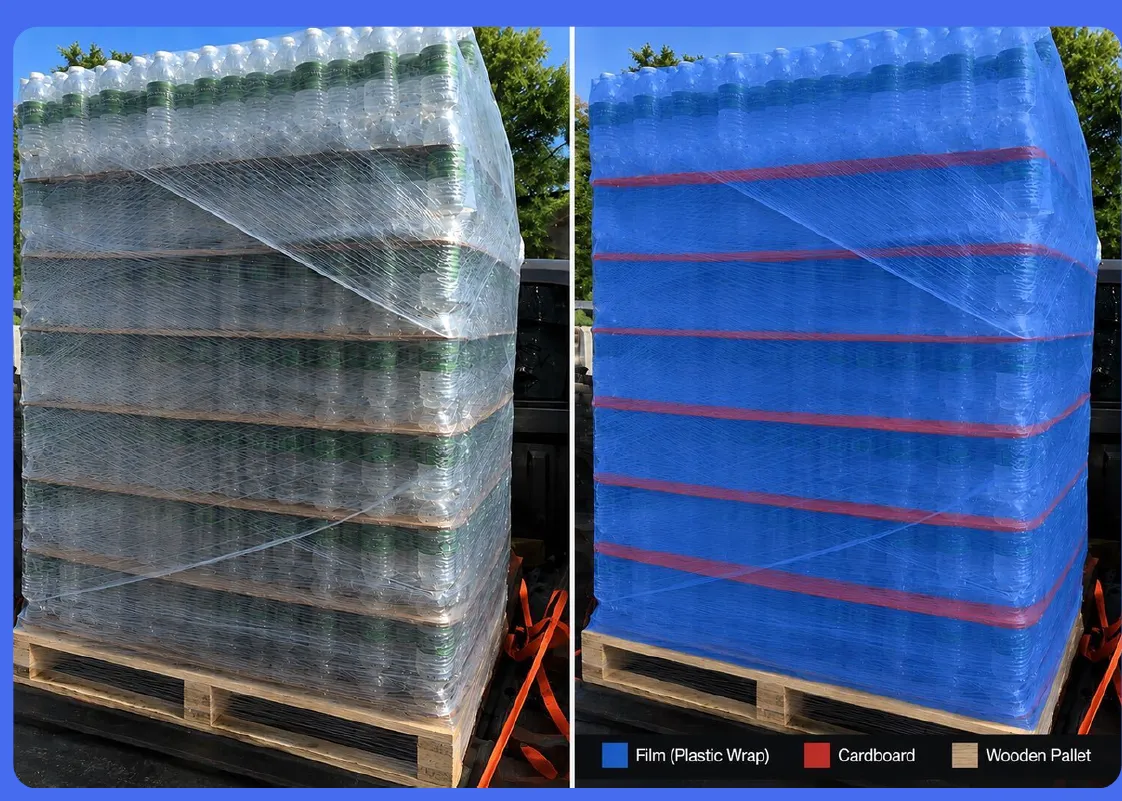
If end-of-line wrap or pallet checks are on your list, bring them up and we’ll look at them alongside the film and bag stations.
Results on four film lines
A flexible packaging producer runs Tristar on four high-speed film lines, inspecting for contamination, seal bar defects and gusset irregularities. Customer claims fell 50% and scrap fell 25%. The case study has the details.
That’s their film, not yours. Send us samples of both good product and the defects behind your claims. We’ll tell you what the system can do after we run your parts. If you’re comparing suppliers, the buyer’s checklist is a fair place to start.