










Automated visual inspection puts a camera and a trained model where an inspector’s eyes used to be, and it looks at every part instead of a sample. A check that depended on who was on shift, and how long they’d been staring at parts, becomes the same check on every cycle.
Tristar builds the station, trains the models on your parts and wires the result into your line. Your inspectors stay. They stop hunting for defects and start dealing with what causes them.
What sampling and four-eye checks leave uncovered
A person can inspect carefully or inspect everything, rarely both. At line speed most plants settle for a sampling plan: pull a part at an interval, check it, and assume the parts in between look the same. A die that starts scratching right after a pull keeps running until the next one.
Four-eye inspection adds a second person to catch what the first one missed. It helps, and it doubles the labor on the check without changing its limits. Both people get tired. Both get used to slow drift, so a surface that’s a little worse every hour still looks normal. And neither leaves much of a record beyond a tally sheet.
At one steel stamping operation, two operators spent 80 hours per month per line on manual four-eye checks before a station went in. That’s skilled time spent looking at parts that were mostly fine.
How an automated visual inspection system takes over the check
Image every part
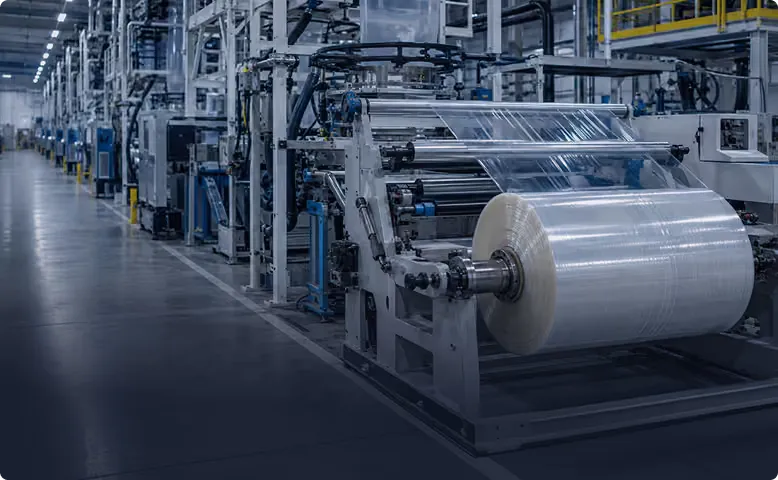
Cameras and lighting go where the inspector stood, or earlier in the line. Area cameras cover discrete parts, and line-scan cameras cover moving webs.
Judge against one standard
A model trained on your good and bad parts classifies each image on an edge server in the plant. The tolerance is the one you set, and it doesn't move between shifts.
Remove or mark the bad one
A signal to the PLC fires the reject gate, the kick-off or the flagger. Nobody reaches into the line.
Call a person when it matters
A run of defects raises an on-screen or sound alert, so an operator walks to the press or the extruder already knowing what the problem looks like.
The model itself is explained in what AI visual inspection is. If you’re weighing this against camera systems that run on hand-written rules, the AI visual inspection page has that comparison.
Manual, four-eye and automated checks side by side
| One inspector, sampling | Four-eye check | Automated station | |
|---|---|---|---|
| Parts looked at | A sample | A sample, seen twice | Every part |
| Late in a long shift | Attention fades | Attention fades for both | No change |
| Slow drift in quality | Easy to get used to | Easy to get used to | Held against a fixed tolerance |
| Reaction to a defect run | At the next pull | At the next pull | While the run is starting |
| What’s left afterward | Tally sheet | Tally sheet | Image, defect type, location and time |
| Labor on the check | One person per station | Two people per station | Review of exceptions |
What happens to your inspectors
The honest labor story is redeployment. The people doing visual checks often know the process better than anyone: which die scratches when it’s due for maintenance, which resin lot runs dirty. Watching parts go by wastes that knowledge.
Once a station is live, the work that’s left is different. Someone reviews what the system flagged, confirms the borderline calls and decides whether a new kind of mark is a defect or acceptable. Someone answers the alerts and fixes the cause.
In the stamping deployment, one operator now manages the workload that used to take two. Across the operation, more than 5,300 labor hours were saved and manual inspection dropped by 2.5 FTE. Those hours went back into running the lines.
If inspection roles are hard to fill at your plant, there’s a second effect: an open position on the check stops deciding which lines can run.
Putting an AI inspection station on your line
The hardware is standard: industrial cameras, lighting, and an edge GPU server that stays inside your network. If cameras are already installed, we can evaluate running on them.
From your side it takes samples of good and bad parts, and someone who can say what counts as a reject. Tristar does the labeling and training, and your team validates the edge cases. After go-live, a short weekly review adjusts tolerances and adds defect types as they turn up.
Don’t automate every check at once. Start with the stations where a missed defect costs the most, or where the check eats the most hours. The buyer’s checklist lists what to ask any vendor before a trial, and automated quality inspection covers what the inspection record does for claims and audits.
What it returned in stamping
Labor is only part of the return. In the same steel stamping deployment, scrap fell 25% and the system paid for itself in 3 months, because a station that sees every part also catches a bad run early. Scrap reduction in manufacturing walks through why earlier detection moves that number.
That’s one operation’s result. We’ll tell you what to expect on your line after we run your parts.