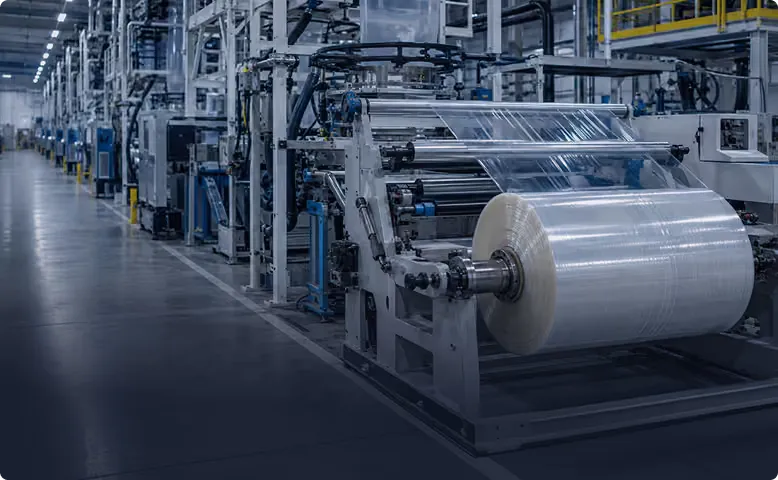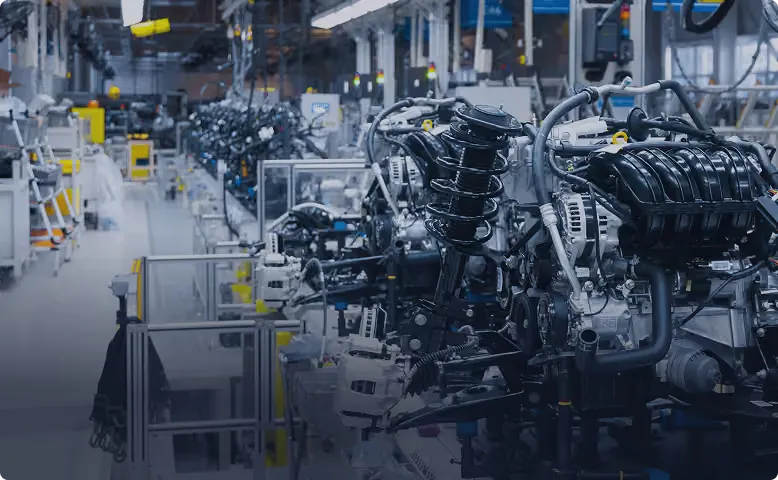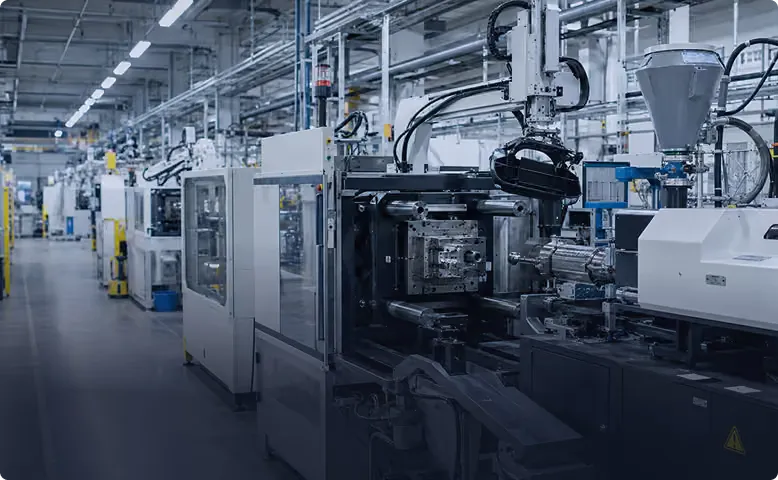











Production line monitoring has mostly meant machine signals: cycle counts, run and stop states, temperatures and pressures. Those tell you whether the equipment is running. They don’t tell you whether what it’s making is any good. Tristar adds the missing sensor, a camera that watches the product and the process on every cycle.
Tristar is vision-based quality and process monitoring. It isn’t an MES or an OEE suite, and it doesn’t try to be. It sends what it sees to those systems.
What machine data misses
A press can hit every stroke on time while a cracked die puts the same flaw into every part. A film line can hold its setpoints while gels and carbon specks come through in the film. From the controller’s point of view, both lines are healthy.
The gap usually gets filled by people. An operator checks parts when there’s time, and a quality tech pulls samples on a schedule. Between checks the line is unobserved, and at night or during a changeover the checks themselves get thinner. Problems that start in those windows run until someone happens to look.
A camera doesn’t have windows. It looks at every part or every foot of web, and it reports in the same way at any hour.
What the AI cameras watch
- Product quality. Surface and formed-part defects on metal, contamination and gels in film, flow lines and short shots on molded parts.
- Assembly steps. Missed or skipped steps, steps out of sequence, missing components, wrong parts or variants, and cycle-time anomalies.
- Anomalies. Anything that doesn’t look like normal production is flagged for review, even if nobody defined it as a defect.
Each detection carries its type, location, size and time, and is tied to the lot. That record is the raw material for everything else on this page. If inspection itself is your main interest, the AI visual inspection page covers the station in detail.
How real-time production monitoring reaches the right person
Detect
An edge GPU server in the plant runs the model on each frame as it's captured. Nothing waits on a round trip to the cloud.
Alert the station
The operator sees an on-screen alert with the image, and a sound alert if the station is set up for one.
Escalate
If defects keep coming, mass alerting reaches the shift lead, maintenance or quality.
Signal the line
In parallel, the PLC gets an output to reject, flag or divert, so containment doesn't depend on someone reading a screen.
Log and trend
The event lands on the dashboard and in the data sent to your MES or ERP.
The edge AI article explains why the processing sits next to the line.
A defect spike on the night shift
On a steel stamping line monitored by Tristar, a defect spike began during a night shift. The system flagged it within 10 seconds. The line was corrected, and more than 10,000 defective parts were never made.
Nothing about that event was exotic. It’s the ordinary case that monitoring exists for: a tool issue starts, the machine keeps cycling, and the only question is how long it runs before someone knows. With a periodic check, the answer is whatever is left until the next check. With a camera on every part, it’s seconds.
Trends by line, tool and shift
Alerts handle the next minute. Trends handle the next month.
Because every defect is logged with its context, the dashboard can answer questions that used to take a spreadsheet and a week. Which line produces the most of a given defect? Does it follow a particular tool? Does one shift see more of it than another? Did it start after a changeover or a material lot?
Leadership sees defect rates across lines in one view. Process engineers get the detail underneath, down to the images. The same data supports the scrap work described in scrap reduction in manufacturing, where finding the tool or setting behind a defect matters more than catching the defect itself.
In the stamping deployment, across seven press lines, scrap fell 25% and throughput rose 3%. The case study is public.
Where a production line monitoring system fits with MES and OEE
Buyers often ask whether this replaces something they already have. It doesn’t. It fills in a column those systems leave blank.
| Question | MES or OEE software | Tristar |
|---|---|---|
| Is the machine running? | Yes | No |
| How much did we make against plan? | Yes | No |
| Why was the line down? | Yes | No |
| Is the product coming off the line good right now? | Only from manual entries | Yes, from every part |
| Which defect, where, and on which tool or shift? | Rarely | Yes |
| Can it trigger a reject or a flag? | No | Yes, through the PLC |
Tristar sends its quality data to your MES or ERP, so the quality term in your existing reports rests on inspection of every part, not on samples. For a view of what that data can do once it’s collected, see AI manufacturing analytics.
We can’t tell you in advance what monitoring will find on your line. Show us the line and send sample parts, and we’ll tell you what the cameras can see after we run them.