










Self-learning AI for manufacturing is a phrase that gets stretched a lot. Here’s what it means on a Tristar inspection station: the model notices what it hasn’t seen, labels most of it for you, and gets better every week, with a person approving each step. It doesn’t mean a system that changes its own rules overnight, and it doesn’t mean nobody has to do any engineering.
The reason it matters is simple. A model trained once on last quarter’s parts slowly goes out of date. New SKUs arrive, material suppliers change, a die wears in a way nobody planned for. Inspection that can’t keep up either starts missing defects or starts rejecting good product, and operators stop trusting it.
What the model already knows on day one
Tristar starts from a foundation model that already understands materials. It looks past background, reflection, gradients, shadows and opacity, and focuses on the material itself. On steel it can ignore dirt and minor scratches and segment surfaces, so it begins with a working idea of what a real defect looks like.
That head start is why a station doesn’t need months of data collection before it’s useful. The specifics of your product still have to be taught, and Tristar does the labeling and training while your team validates the edge cases. How AI defect detection works explains the model side in more detail.
Active learning inspection after go-live
Flag
During production the model surfaces frames that don't fit known good product or known defect types.
Pre-label
Active learning annotates the new examples itself, so people confirm instead of drawing every outline.
Review
In a short weekly check, your quality team and Tristar engineers decide what's a defect, what's acceptable variation and where the tolerance sits.
Update
The model is updated and checked against the validation set before the change goes live on the line.
The difference from a consultant-built model shows up here. With a one-off project, every new variation means paying someone to collect, label and retrain. With active learning, the system does most of the finding and labeling, and the people only make decisions.
The weekly review is the part buyers ask about most. It takes a few minutes of your team’s time. Its job is to keep tolerances where you want them, so the station catches what matters without burying operators in false positives.
AI that learns new defects, and new SKUs
Two kinds of change show up after launch.
New defects are the first. A contamination type nobody listed, a mark from a worn tool. Because the model flags anomalies instead of only matching a fixed list, these get noticed. After review they become a named defect class with its own tolerance.
New products are the second. Each SKU has its own logic, but what the model learned about the material carries over. A changeover means tuning on the new product, not a training project from zero. Some plants also want their own engineers to add inspection points; the software lets them do that with a handful of images.
What self-learning doesn’t replace
We’d rather be plain about the limits than have you discover them in month two.
- Tristar engineers keep calibrating the system after deployment. Active learning carries a lot of the load, but it’s backed by people.
- High-mix production needs real engineering work. We start with the part and defect combinations that cost the most, often the highest-volume part, and extend from there.
- Optics still matter. If the camera can’t see a defect, no amount of learning will find it, which is why station design comes first. See vision AI for manufacturing.
- Every change is measured. A validation set tracks true and false positives by defect type, and a calibration report at install gives auditors something to read.
Physical AI for manufacturing, in a narrow and useful form
“Physical AI” usually means models that perceive and act in the real world. An inspection station is a small, practical version of that: it sees every part, decides, and acts through the PLC by rejecting, flagging or alerting. The learning loop is what keeps that decision accurate as the physical product changes.
It also gives quality managers something an inspector’s memory can’t: a record of every decision and every change to the model, which is what auditors and customers ask for when a claim lands.
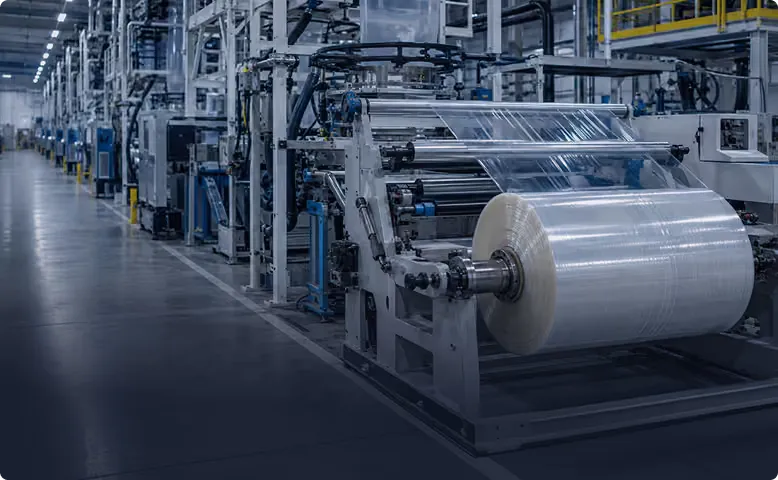
On four plastic film lines, inspection run this way cut scrap 25% and customer claims 50%. For how this approach differs from fixed-threshold systems, read AI vs. rule-based machine vision.