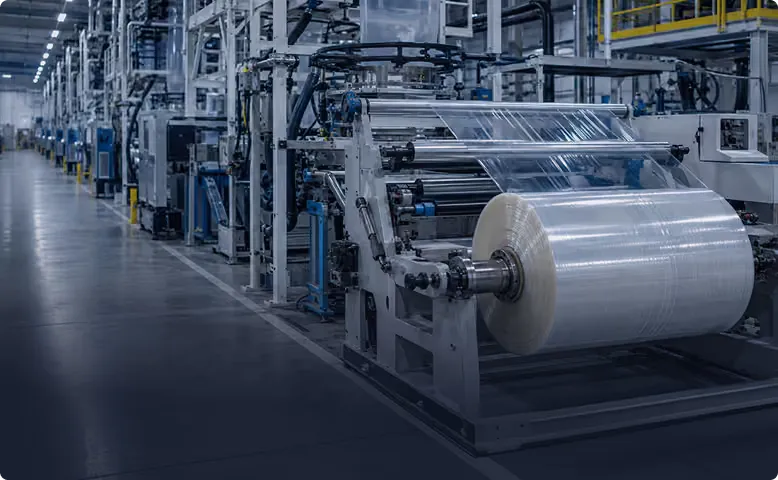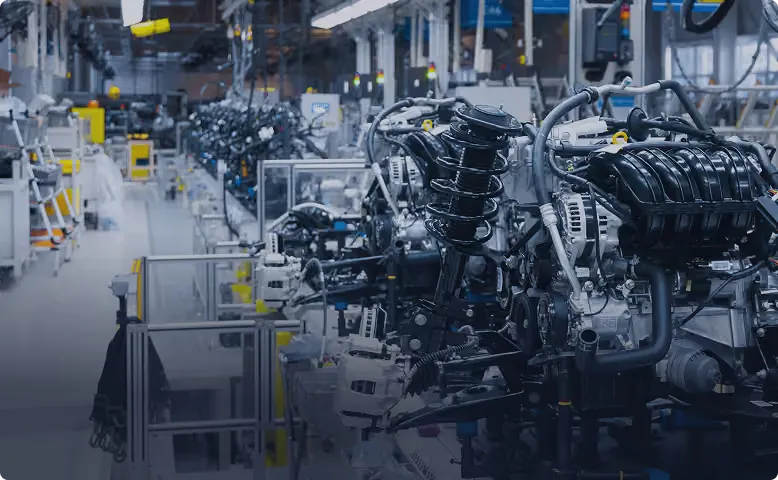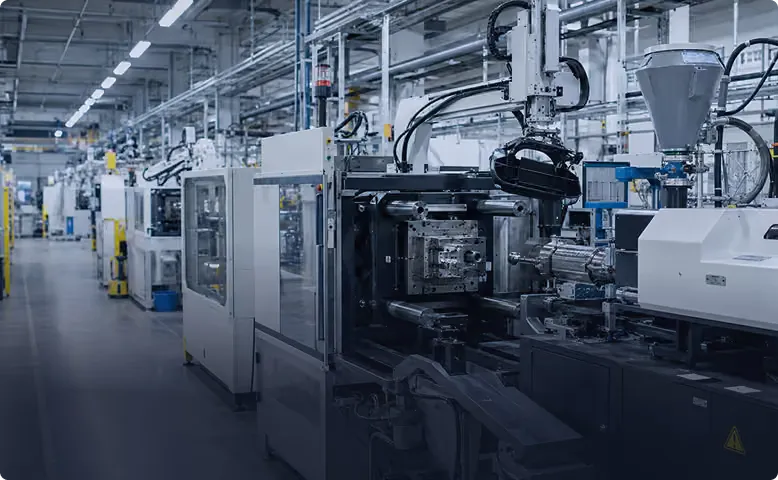











Most smart manufacturing automation projects begin with the sensors a plant already has: temperature, pressure, speed, current. Those describe the process. None of them looks at the product. A camera does, and a plant that connects its camera data to PLCs and to MES or ERP gets the piece of the smart factory that pays first: knowing, in real time, whether what it’s making is good.
Tristar provides that vision and quality layer. We aren’t an IoT platform, and we don’t try to be one.
A camera is the richest sensor on the line
A thermocouple gives you one value. A camera frame gives you the whole surface of a part, and a trained model turns that frame into structured data: defect type, position, size and time.
That matters because many quality problems never show up in process variables. A die can start scoring parts while tonnage looks normal. A film line can run at setpoint and still throw gels. The product is the only place the problem is visible, so the product is what has to be measured. What is AI visual inspection covers the basics of how a model reads those frames.
It’s also why inspection data is denser than sampling. Every part or every foot of web gets a result, so the dataset has no gaps to argue about.
What AI vision data does once it’s connected
On its own, an inspection result is a pass or a fail. Connected, it becomes useful to four different groups in the plant.
| Connected to | What happens | Who uses it |
|---|---|---|
| Operator station | Real-time alerts, sound alerts and mass alerts when defects appear or spike | Operators and shift leads |
| PLC | A signal drives a reject gate, kick-off system, flagger or robot | Controls and production |
| MES or ERP | Defects are traced to the lot, with images | Quality and customer service |
| Dashboard | Trends by line, product and plant | Plant managers and operations leadership |
Lot traceability changes how claims go. When a customer calls about a roll or a shipment, quality pulls the record and sees what was detected, where and when. Without that record, the conversation is one opinion against another.
The trend view is what production line monitoring is built on: the same detections, read over hours and weeks to show which line, tool or shift the defects come from.
Tristar’s place in smart factory automation
Vendors of IoT automation systems for manufacturing offer connectivity, device management, historians and analytics across every machine. That’s a different product from ours, and plants usually have one already or are choosing one.
Tristar plugs into it. Here’s the split:
- Your IoT and MES stack collects machine and process data, manages orders and genealogy, and remains the system of record.
- Your PLCs keep controlling the line.
- Tristar inspects the product with cameras and AI models, alerts people, signals the PLC and passes defect records upward.
We won’t sell you a platform to replace those systems, and you don’t need a finished smart factory program before starting. A plant with PLCs and nothing else gets alerts, reject signals and roll reports from the first station. The MES link can follow.
Why the processing stays on the edge
Inspection has to keep up with the line, and a reject signal that arrives late is useless. So the models run on a GPU server inside the plant, next to the cameras. Images are processed there, and nothing needs to go to the cloud.
It also gives IT a simpler question to review, because production images stay inside your network. Edge AI for quality inspection goes into the architecture.
From one line to several plants
Smart factory automation tends to stall when it starts as a plant-wide program. Vision data scales better when it starts small.
Pick one line and one defect that costs money
Send good and bad samples. We run them and tell you what the model sees.
Connect the first station
Cameras, an edge server, alerts for operators and a signal to the PLC. Quality data starts flowing.
Add traceability
Tie detections to the lot and share them with MES or ERP, so claims and audits draw on the same records.
Repeat on the next line
What the models learned transfers to new products and lines, and definitions stay identical, so trends are comparable.
Compare across plants
The dashboard shows leadership where quality differs between sites and where to send engineering help.
A weekly review with your engineers keeps the system current after go-live: it sets tolerances and adds new defect types as they appear. For plants standardizing across sites, enterprise AI for manufacturing covers the rollout side.
What connected inspection paid on four film lines
A flexible packaging producer put Tristar on four high-speed plastic film lines to catch contamination, seal bar defects and gusset irregularities. Scrap fell 25%, customer claims fell 50%, and two inspection positions were redeployed. The company is now expanding to four more plants. Read the case study.
That’s one producer’s result. We’ll tell you what yours could be after we run your parts.