










AI for manufacturing covers a lot of ground: maintenance, scheduling, forecasting, quality, even drafting work instructions. Most of those projects begin with a data problem. The signals are spread across historians, spreadsheets and people’s heads, and somebody has to clean them before a model can learn anything.
Vision is the exception. Put a camera over the line and the data is produced in front of it, one part at a time, already tied to a time and a station. That’s the part of AI in manufacturing Tristar works on: AI visual inspection, vision-based production monitoring, and the wiring that lets the line act on the result.
Why vision is where AI for manufacturing pays back first
A use case pays back quickly when you can say yes to a short list of questions. Does the data exist today? Is the outcome already measured? Can the model’s answer change what the line does?
Inline inspection clears all of them:
- The product passes a fixed point, so every unit can be imaged without a new data pipeline.
- Scrap, inspection hours and customer claims are already on the plant’s reports, so there’s a baseline.
- A defect call can drive a reject gate or an alert right away, so the answer gets used.
- The scope is small. One station on one line is a complete project with its own return.
Compare that with a plant-wide optimization program, where the first deliverable is often a data lake and the return shows up later, if the pilot survives. For background on the technology itself, read what AI visual inspection is.
What keeps AI in manufacturing stuck in pilot
Pilots rarely fail because the model was bad. They fail because nothing on the floor depended on it. The same few causes come up again and again, and a narrow, line-level start answers each one.
| Why pilots stall | What a line-level start does instead |
|---|---|
| The model runs on exported data in a lab | It runs on live frames from the line, on a server in the plant |
| No agreed metric | Scrap rate, inspection hours and claims are the scorecard from day one |
| Nobody on the floor owns it | Operators get the alerts and quality owns the tolerances |
| The output is a report | The output is a PLC signal: reject, flag, stop or alert |
| Scope covers every product | Scope is the handful of part and defect combinations that cost the most |
| The model is frozen at handover | A weekly review keeps tuning it after go-live |
None of this needs a transformation program. It needs one line, one owner and one number.
A narrow start: one automated line at a time
Here’s the path Tristar follows on a first line.
Pick the line and the defects
Choose the station where bad product costs the most, and name the defects that drive scrap or claims there. High-mix plants start with a short list of parts, not the whole catalog.
Run your samples
You send good and bad parts. Tristar labels them, trains the model and reports what it caught and what it missed. Your team validates the edge cases.
Install the station
Standard industrial cameras, lighting chosen for the material and an edge GPU server go on the line. The result is wired to the PLC and to the operator station.
Tune on live production
The system flags anomalies it hasn't seen before. A short weekly review sets tolerances and adds defect types as they show up.
Carry it to the next line
Knowledge transfers to new SKUs without starting over, so each new station begins with what the last one learned.
The mechanics of the model, from frame to reject signal, are covered in how AI defect detection works.
Which industrial AI solutions Tristar provides
Buyers comparing industrial AI solutions for manufacturing deserve a plain answer about scope. Tristar isn’t a general AI platform, an MES or an IoT data layer, and it doesn’t do predictive maintenance or scheduling.
What it does:
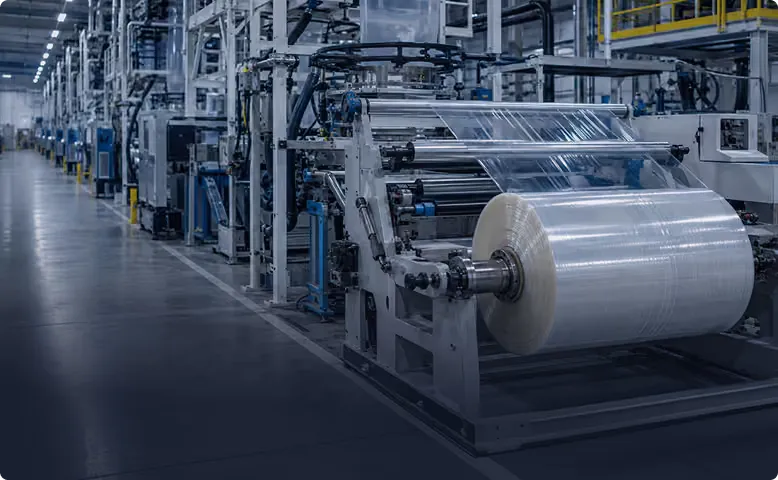
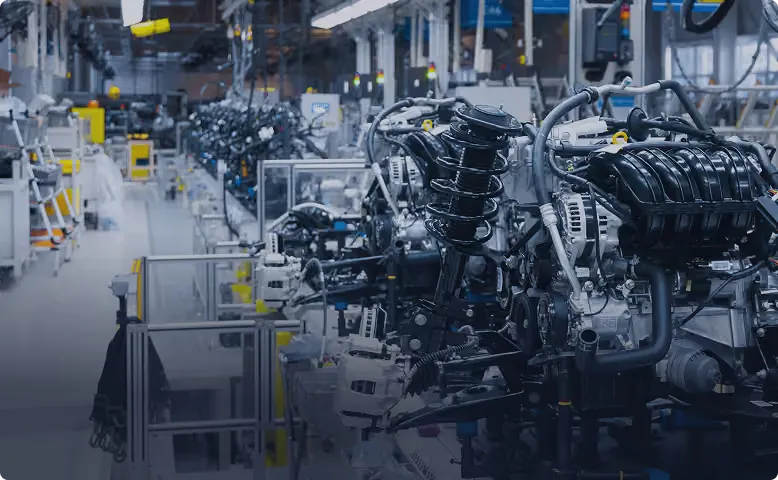
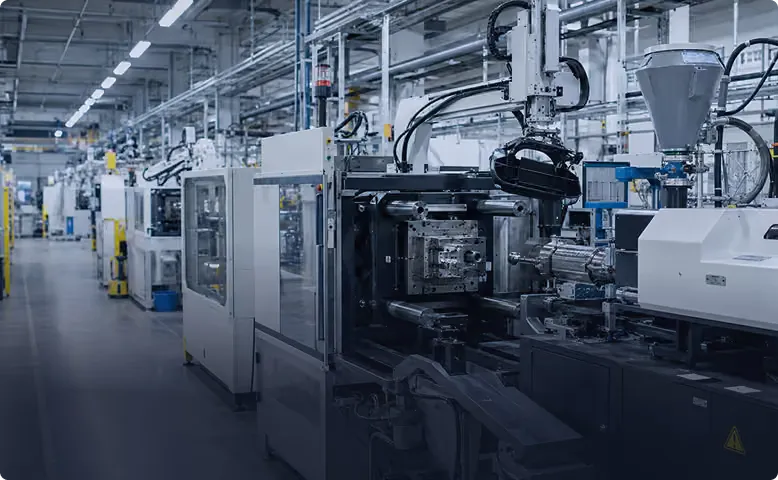
- Inspection. Surface and assembly defects on plastic film, stamped and formed metal, injection molded parts and assembled products. The AI visual inspection page has the defect lists.
- Production monitoring. Cameras that watch the line itself and alert when something’s off, described under production line monitoring.
- Closing the loop. PLC signaling, reject and kick-off systems, robots, flaggers and records written to MES or ERP.
If your roadmap has other AI projects on it, inspection still makes a good first one. It builds the habits those projects need: a metric, an owner on the floor and a model that gets reviewed every week.
What a first line has returned
On a steel stamping deployment across seven press lines, scrap fell 25% and began trending down within 120 days. The system paid for itself in three months and returned $1.2M in annual savings, with throughput up 3%. The full numbers are in the steel stamping case study.
Scrap is usually the largest lever, and scrap reduction in manufacturing explains how to size it for your own plant.
Those results belong to that plant. We don’t quote a figure for yours until we’ve run your parts.