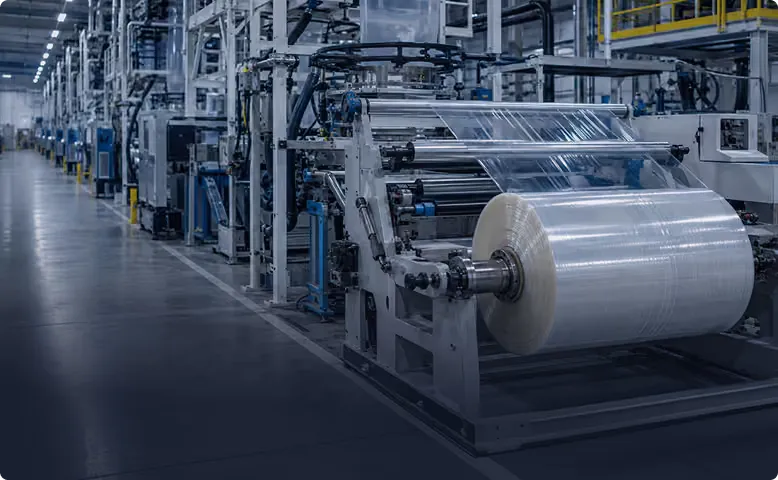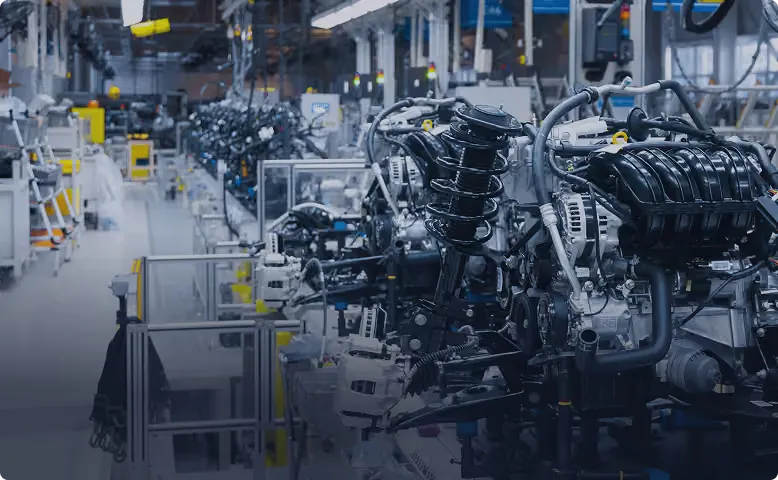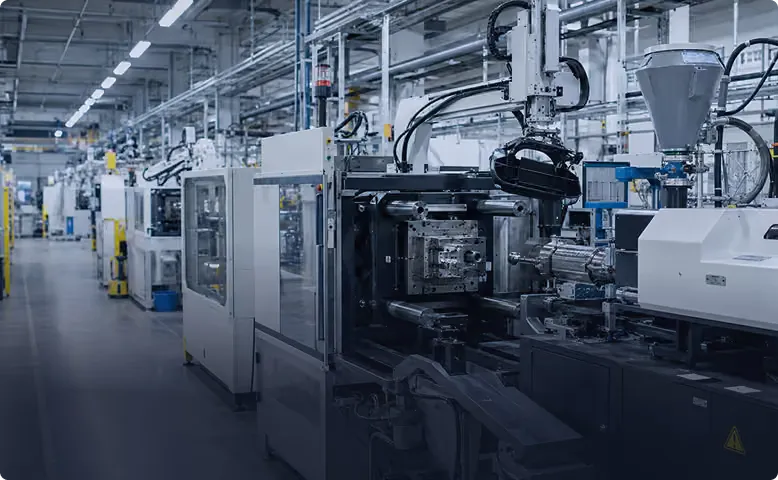











Manufacturing automation has moved quickly through forming, molding, conveying and packing. Then the product reaches a person with a light and a checklist. On many lines, visual inspection is the last step that still runs on human attention.
Tristar automates that step. To be clear about scope: we do AI visual inspection, vision-based production monitoring and the integrations that tie the result to the line. We don’t build production cells, sell robots or act as a general automation integrator.
The last manual step on an automated line
Inspection stayed manual for a reason. Older rule-based cameras handled simple geometric checks but struggled with gloss, texture and normal variation, so plants kept people on anything that needed judgment.
That leaves a gap in an otherwise automatic process. The machine makes parts at a fixed rate. A person samples some of them. A problem that starts between samples keeps running until someone happens to look.
The cost shows up in labor and in scrap. In a steel stamping operation, two operators spent 80 hours per month per line on manual four-eye checks before the change. Afterward, one operator managed that workload.
AI models changed what a camera can judge. They learn what good material looks like and flag what doesn’t fit, which is why the judgment step can now be automated too. AI vs. rule-based machine vision compares the two approaches.
Where inspection sits in manufacturing automation
Plant automation is usually described in layers. Inspection touches several of them, and it helps to see which.
| Layer | What it does | Where automated inspection fits |
|---|---|---|
| Field devices | Sensors, actuators and drives on the machine | Cameras and lighting act as the sensor |
| Control | PLCs sequence the machine and its safeguards | The inspection result arrives as a PLC signal |
| Line equipment | Reject gates, kick-off systems, robots, markers | They act on that signal |
| Supervision | Operator screens and alarms | Alerts and defect images appear at the station |
| Operations and business | MES and ERP hold orders, lots and quality records | Defects are logged against the lot |
Tristar supplies the inspection station and its links into each layer. Your controls team, or your integrator, still owns the PLC logic and the equipment. Anyone weighing industrial automation for manufacturing at plant scale will have other vendors for those layers, and that’s as it should be.
An automated loop from AI camera to reject
An inspection result that only lands in a report is half automated. The value comes from what the line does with it.
See
Cameras image every part, or the full width of a web, at line speed. Lighting is set up to control glare so the surface is readable.
Judge
A model on an edge GPU server in the plant decides whether each unit is good and, if it isn't, what the defect is.
Signal
The result goes to the PLC. Your logic decides what a bad result triggers at that station.
Act
A reject gate diverts the part, a flagger marks the roll, a robot sets the part aside, or an alert calls the operator when the defect repeats.
Record
The defect is logged with its image and tied to the lot, and written to MES or ERP if you want it there.
Speed matters here. In the same stamping deployment, a defect spike on a night shift was flagged within 10 seconds, which prevented more than 10,000 defective parts. A check that samples only finds a spike like that at the next sample.
For a closer look at each stage, read how AI defect detection works.
What it takes to add to a running line
Less disruption than most automation projects, because the station watches the process without changing it.
- Cameras. Standard industrial models. Tristar can evaluate cameras you already have.
- Part presentation. Round parts use rotation the line already has, or a rotation stage is added. Conveyor design can flip parts.
- Compute. An edge GPU server on site. Nothing needs to go to the cloud.
- Controls. A set of signals agreed with whoever owns the PLC program.
- Samples. Good and bad parts from you. Tristar does the labeling and training.
Assembly lines add a different kind of check: missing components, wrong variants, skipped steps. Assembly line inspection with AI covers that case.
Choosing among manufacturing automation solutions
If inspection is the bottleneck, start there. If the constraint is material handling, machine tending or scheduling, a camera won’t fix it, and we’ll say so.
A quick way to tell: look for the step where people are doing repetitive visual checks, where defects reach the customer anyway, or where scrap is found a bin too late. Those are signs the inspection step is the one to automate next.
Related pages go deeper on specific cases. Automated visual inspection covers the station itself, and manufacturing process automation covers feeding results back into process settings.
The stamping operation mentioned above saved more than 5,300 labor hours and saw payback in three months. Its case study is public. For your line, we’ll tell you what to expect after we run your parts.