










AI visual inspection for metal surfaces has to deal with a material that fights the camera: bare steel that mirrors the plant, oil film that changes from coil to coil, and defects a fraction of the size of the panel they sit on. Tristar builds inspection stations for stamped parts, formed panels and weld seams, and connects them to the press so a bad run ends early.
This page is about deploying it. For the defect types themselves and how they form, read metal surface defect detection.
What the AI inspects
Stamped and blanked parts. Scratches and scrapes from the die, cracks and splits, dents, edge burrs, and incoming coil defects such as pitting, scale, rust, slivers, laminations and roll marks.
Formed parts. The same surface defects, plus bend defects and missing or deformed holes. One station covers both, so you don’t need a separate presence check.
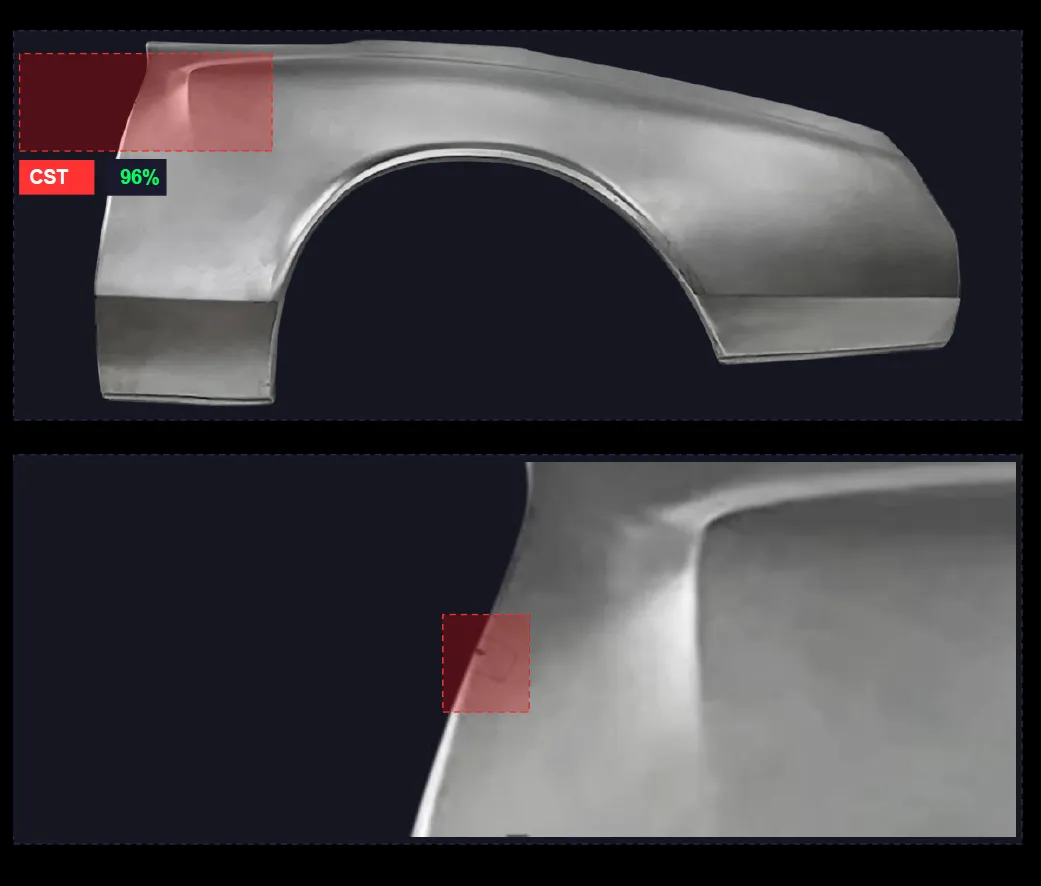
Weld seams. Seams are imaged and assessed along their length.
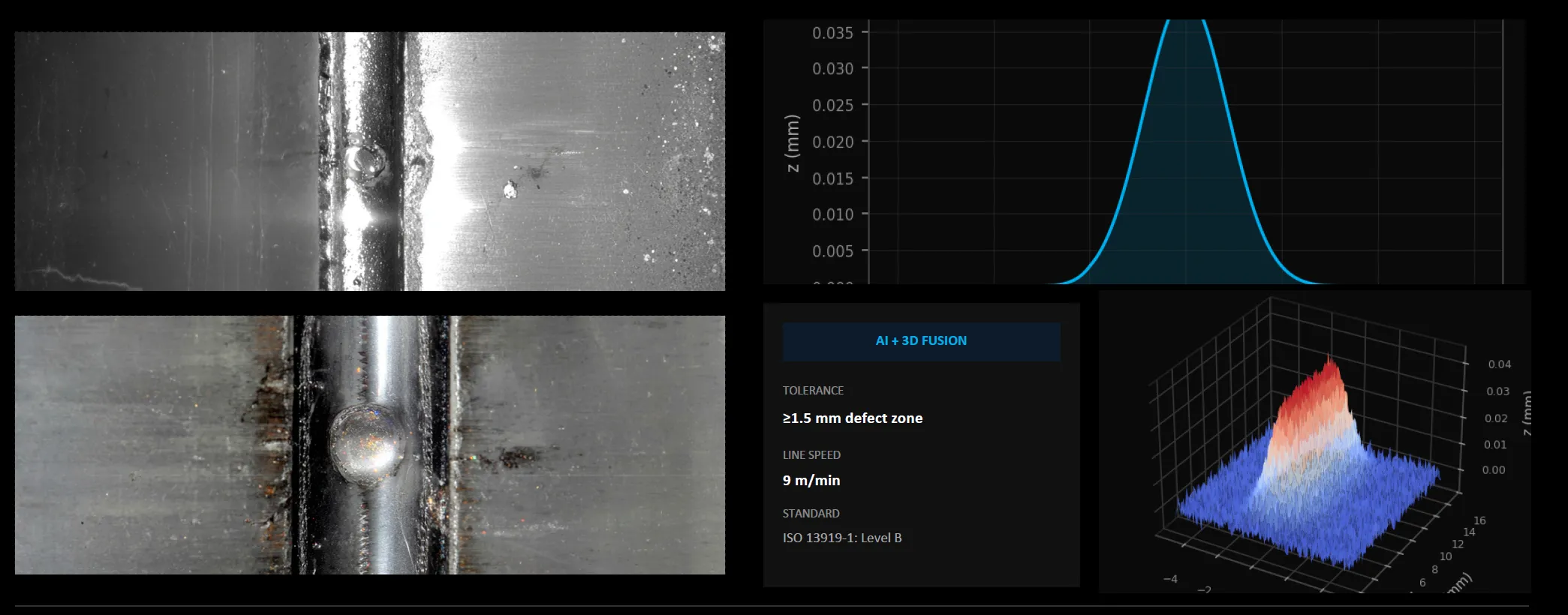
You set what’s a reject. A scratch that fails a visible outer panel may be fine on a structural bracket, so tolerances are defined per part and per defect type.
Press exit or end of line?
Where the station sits decides what it’s good for. It’s the first design question we ask.
| At the press exit | At the end of the line | |
|---|---|---|
| Sees | Each part right after the hit | The finished part, after forming, welding and handling |
| Best at | Stopping a die or coil problem within a few parts | Stopping defective parts from shipping |
| Main saving | Scrap, and the value added to parts that were already bad | Claims, sorting and customer containment |
| Reaction | Alert the operator or signal the press through the PLC | Kick off or divert the part; alert upstream |
| Watch for | Oil, slugs and part presentation off the die | A defect found late has already cost its downstream operations |
If scrap is the bigger cost, start at the press. If escapes are, start at the end. Plants with both problems usually begin with the press lines that produce the most scrap and add final inspection later. The scrap reduction page covers how to pick those lines.
AI visual inspection for metal surfaces on seven press lines
A steel stamping operation deployed Tristar across three facilities and seven press lines. Before, two operators spent 80 hours per month per line on manual four-eye checks. Now one operator manages that workload.
What the operation reported:
- 98% detection accuracy.
- 25% less scrap, with scrap trending down within 120 days.
- More than 5,300 labor hours saved, and a 2.5 FTE reduction in manual inspection.
- Throughput up 3%, about 800,000 additional parts per year.
- $1.2M in annual savings, a 3-month payback and $3.6M in projected 3-year savings.
One event shows how the money is made. On a night shift, the system flagged a defect spike within 10 seconds. The line was corrected, and more than 10,000 defective parts were never produced. With periodic manual checks, that run would’ve continued until the next check.
The full case study is public. It’s one operation’s result, and we don’t promise the same on other parts.
How an automated station is built for metal
Define the defects and the spot
We agree on the part numbers, the defects that cost the most, the smallest one that matters, and press exit or end of line.
Design optics for the part
Cameras are chosen for defect size and field of view. Lighting is set up to control glare, and conveyor design can flip the part when both faces count.
Train on your steel
You send good and defective samples. Tristar labels and trains, and your team validates the edge cases.
Connect the line
The edge server signals the PLC to kick off a part, divert it or stop the press, and alerts go to the operator station.
Tune after go-live
A short weekly review adjusts tolerances and adds defect types. Knowledge carries over to new part numbers.
High-mix shops shouldn’t try to cover every part number at the start. Pick the handful of part and defect combinations behind most of the scrap, prove the station there, then extend it. For the general case beyond metal, see surface defect detection.
What to send us
A useful first conversation needs very little:
- Good parts, and defective parts for each defect you care about, including borderline ones.
- The press rate and how parts leave the die: conveyor, chute or robot.
- Which defects reach your customer today, and which ones fill the scrap bin.
- What your line can act on: a PLC tag, a kick-off, a robot, a press stop.
We run the samples and report what the model caught and what it missed. If you’re comparing vendors, how to evaluate an AI visual inspection system gives you questions to ask all of us, and scrap reduction in manufacturing helps with the business case.
We’ll tell you what to expect after we run your parts.